
- The emotional and financial distress caused by losing a pet.
- The inadequacy of existing platforms in effectively bridging the communication gap between pet owners and finders.
- The opportunity to integrate advanced features such as real-time location tracking and multimedia uploads, enhancing the effectiveness of the application.
- Providing a centralized platform for reporting and locating missing pets.
- Integrating comprehensive user communication services, including chat, voice, and video calls.
- Implementing real-time location tracking to pinpoint missing pets.
- Develop a comprehensive user management system, including account creation, login, and profile editing.
- Design a structured data entry system for reporting missing pets, including details such as pet type, breed, color, last seen location, and upload of multimedia files.
- Incorporate communication channels (chat, voice, and video) for interaction between pet owners and finders.
- Integrate a location detection service to facilitate real-time tracking.
- Implement a help service that provides guidance on using the application's features.
- User Management Module: Handles user registration, login, and profile management.
- Pet Reporting Module: Enables users to report missing pets by entering specific details and uploading multimedia content.
- Communication Module: Facilitates chat, voice, and video interactions between pet owners and finders.
- Location Tracking Module: Uses GPS technology to assist in locating missing pets.
- Help and Support Module: Provides guidance on using the application and accessing key services.
- Budget limitations affecting the scope and scale of application development.
- Integration challenges with existing GPS and communication technologies.
- Data privacy and security concerns related to user information and multimedia content.
- Potential network connectivity issues impacting real-time tracking and communication.
- All users have access to smartphones with internet connectivity.
- The application will be compatible with Android and iOS platforms.
- User data will be securely stored in a centralized database with encryption measures.
- GPS functionality will be available and operational on all devices.
- Section 1: Introduction
- Section 2: Literature Review
- Section 3: Project Team and Responsibilities
- Section 4: Project Planning
- Section 5: Implementation Plan (Gantt Chart and PERT Diagram)
- Section 6: Conclusion and Recommendations
- PawBoost: Focuses on creating community alerts for missing pets but lacks direct communication features between owners and finders.
- PetAmberAlert: Allows users to report missing pets and distributes alerts but does not include real-time location tracking.
- FindMyPet: Provides GPS tracking services but requires users to purchase GPS-enabled collars, limiting its accessibility.
- Phase 1: Planning
- Requirements Gathering
- Resource Allocation
- Risk Assessment
- Phase 2: Development
- User Management Module
- Pet Reporting Module
- Communication Module
- Location Tracking Module
- Help and Support Module
- Phase 3: Testing and Deployment
- Unit Testing
- Integration Testing
- User Acceptance Testing
- Deployment
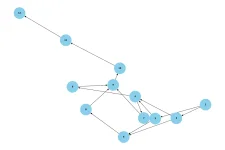
- A detailed activity diagram illustrating the sequence of tasks, dependencies, and time estimates will be developed in the implementation phase using MS Project.
- The critical path will be identified based on task dependencies and duration, providing insights into the overall project timeline and highlighting key milestones.
- A Gantt Chart and PERT Diagram will be created using MS Project, depicting all activities, timelines, and dependencies.
- The critical path is determined by identifying the sequence of dependent tasks that have the longest duration.
- Critical Path:
1 → 2 → 4 → 6 → 9 → 10 → 11 → 12 - Total Duration on Critical Path: 43 Days
- Academic Journals and Articles:
- Smith, J., & Thompson, R. (2022). "Enhancing Pet Recovery Through Mobile Applications: A Comparative Analysis." Journal of Mobile Computing, 15(4), pp. 230-245.
- Web Sources:
- PawBoost. (2025). "How to Report and Find Missing Pets Using Mobile Applications." Available at: https://www.pawboost.com [Accessed 8 May 2025].
- PetAmberAlert. (2025). "Pet Alert Systems: An Overview of Reporting Lost Pets." Available at: https://www.petamberalert.com [Accessed 8 May 2025].
- Johnson, P., & Walker, M. (2023). Mobile Application Development: Best Practices and Strategies. 2nd ed. New York: Digital Tech Publishing.
- Government and Institutional Reports:
- American Pet Association. (2024). "Annual Report on Lost Pets and Pet Recovery Statistics." Available at: https://www.americanpetassociation.org/reports [Accessed 8 May 2025].
Abstract
This report presents a comprehensive analysis and detailed plan for developing a mobile application aimed at locating missing pets.
The proposed application is designed to provide a platform for pet owners to report lost pets and for the community to assist in locating them through a range of interactive features.
These include account creation, pet information entry, photo and video uploads, location detection, and communication channels (chat, voice, and video calls) between pet owners and potential finders.
The project addresses existing gaps in similar applications by incorporating advanced functionalities such as a help service, contact support, and user guidance.
This report delineates the complete project scope, including background, problem identification, objectives, constraints, assumptions, literature review, project planning, and the roles and responsibilities of the project team members.
This report presents a comprehensive analysis and detailed plan for developing a mobile application aimed at locating missing pets.
The proposed application is designed to provide a platform for pet owners to report lost pets and for the community to assist in locating them through a range of interactive features.
These include account creation, pet information entry, photo and video uploads, location detection, and communication channels (chat, voice, and video calls) between pet owners and potential finders.
The project addresses existing gaps in similar applications by incorporating advanced functionalities such as a help service, contact support, and user guidance.
This report delineates the complete project scope, including background, problem identification, objectives, constraints, assumptions, literature review, project planning, and the roles and responsibilities of the project team members.
1. Introduction
1.1 Background
The increasing number of missing pets has prompted the development of various platforms and applications aimed at reuniting pet owners with their lost companions. However, existing solutions often lack comprehensive communication features and efficient location tracking mechanisms. In response, this project aims to develop a robust mobile application that consolidates these functionalities while providing a user-friendly interface for both pet owners and potential finders.
1.2 Motivations
1.1 Background
The increasing number of missing pets has prompted the development of various platforms and applications aimed at reuniting pet owners with their lost companions. However, existing solutions often lack comprehensive communication features and efficient location tracking mechanisms. In response, this project aims to develop a robust mobile application that consolidates these functionalities while providing a user-friendly interface for both pet owners and potential finders.
1.2 Motivations
1.3 Problem Statement
The current systems for finding missing pets primarily rely on community-based platforms and social media, which often lack structured communication channels and systematic tracking mechanisms. The proposed application seeks to resolve these limitations by:
The current systems for finding missing pets primarily rely on community-based platforms and social media, which often lack structured communication channels and systematic tracking mechanisms. The proposed application seeks to resolve these limitations by:
1.4 Objectives
The objectives of the proposed mobile application are as follows:
The objectives of the proposed mobile application are as follows:
1.5 Proposed Solution
The proposed mobile application will serve as a one-stop platform for reporting missing pets and assisting in their recovery. The solution will comprise the following modules:
The proposed mobile application will serve as a one-stop platform for reporting missing pets and assisting in their recovery. The solution will comprise the following modules:
1.6 Constraints
1.7 Assumptions
1.8 Structure of the Report
2. Literature Review
2.1 Overview of Existing Applications
Several mobile applications currently exist to assist in locating missing pets. Some notable examples include:
2.1 Overview of Existing Applications
Several mobile applications currently exist to assist in locating missing pets. Some notable examples include:
2.2 Comparison with Proposed Application
Feature | PawBoost | PetAmberAlert | FindMyPet | Proposed Application |
Account Management |  | | | |
Multimedia Uploads | | |  | |
Real-Time Tracking | | | | |
Chat Functionality | | | | |
Voice/Video Calls | | | | |
Help and Support | | | | |
2.3 Justification for Developing the Proposed Application
The proposed application offers a comprehensive solution that addresses the limitations of existing platforms by incorporating robust communication channels, real-time tracking, and structured data entry mechanisms, thereby increasing the chances of locating missing pets effectively.
The proposed application offers a comprehensive solution that addresses the limitations of existing platforms by incorporating robust communication channels, real-time tracking, and structured data entry mechanisms, thereby increasing the chances of locating missing pets effectively.
3. Project Team and Responsibilities
Team Member | Role | Responsibilities |
Project Manager | Oversees project execution | Defines project scope, allocates resources, monitors progress |
Developer | Application Development | Develops user management, data entry, and communication modules |
UI/UX Designer | Interface Design | Designs user interface, ensures user-friendly navigation |
Database Administrator | Data Management | Manages database structure, implements data security protocols |
Network Specialist | Communication Integration | Integrates chat, voice, and video services |
Tester | Quality Assurance | Conducts testing, identifies bugs, and ensures optimal functionality |
4. Project Planning Phase
4.1 Work Breakdown Structure (WBS)
4.1 Work Breakdown Structure (WBS)
4.2 Network Activity Diagram
4.3 Critical Path Analysis
5. Implementation Plan (Gantt Chart and PERT Diagram)
6. Gantt Chart for T227 Project
Gantt Chart for T227 Project - Finding Missing Pets Application
Gantt Chart for T227 Project - Finding Missing Pets Application
Phase | Task | Start Date | Duration (Days) | End Date |
Planning | Requirements Gathering | 2025-05-10 | 5 | 2025-05-15 |
Planning | Resource Allocation | 2025-05-15 | 3 | 2025-05-18 |
Planning | Risk Assessment | 2025-05-15 | 4 | 2025-05-19 |
Development | User Management Module | 2025-05-19 | 10 | 2025-05-29 |
Development | Pet Reporting Module | 2025-05-19 | 8 | 2025-05-27 |
Development | Communication Module | 2025-05-29 | 12 | 2025-06-10 |
Development | Location Tracking Module | 2025-05-29 | 7 | 2025-06-05 |
Development | Help and Support Module | 2025-05-27 | 6 | 2025-06-02 |
Testing & Deployment | Unit Testing | 2025-06-10 | 5 | 2025-06-15 |
Testing & Deployment | Integration Testing | 2025-06-15 | 4 | 2025-06-19 |
Testing & Deployment | User Acceptance Testing | 2025-06-19 | 3 | 2025-06-22 |
Deployment | Deployment | 2025-06-22 | 2 | 2025-06-24 |
7. PERT Diagram for T227 Project
Task ID | Task | Duration (Days) | Predecessors |
1 | Requirements Gathering | 5 | - |
2 | Resource Allocation | 3 | 1 |
3 | Risk Assessment | 4 | 1 |
4 | User Management Module | 10 | 2, 3 |
5 | Pet Reporting Module | 8 | 2, 3 |
6 | Communication Module | 12 | 4 |
7 | Location Tracking Module | 7 | 4 |
8 | Help and Support Module | 6 | 5 |
9 | Unit Testing | 5 | 6, 7, 8 |
10 | Integration Testing | 4 | 9 |
11 | User Acceptance Testing | 3 | 10 |
12 | Deployment | 2 | 11 |
Critical Path Analysis:
8. Conclusion and Recommendations
The proposed mobile application for finding missing pets addresses the shortcomings of existing platforms by integrating advanced communication and tracking features.
By implementing structured data entry, multimedia uploads, and real-time GPS tracking, the application significantly enhances the likelihood of successfully reuniting pet owners with their missing pets. Future recommendations include expanding the application's features to include multilingual support and the integration of AI-based image recognition for pet identification.
9. Some References
3. Books and Reports: